
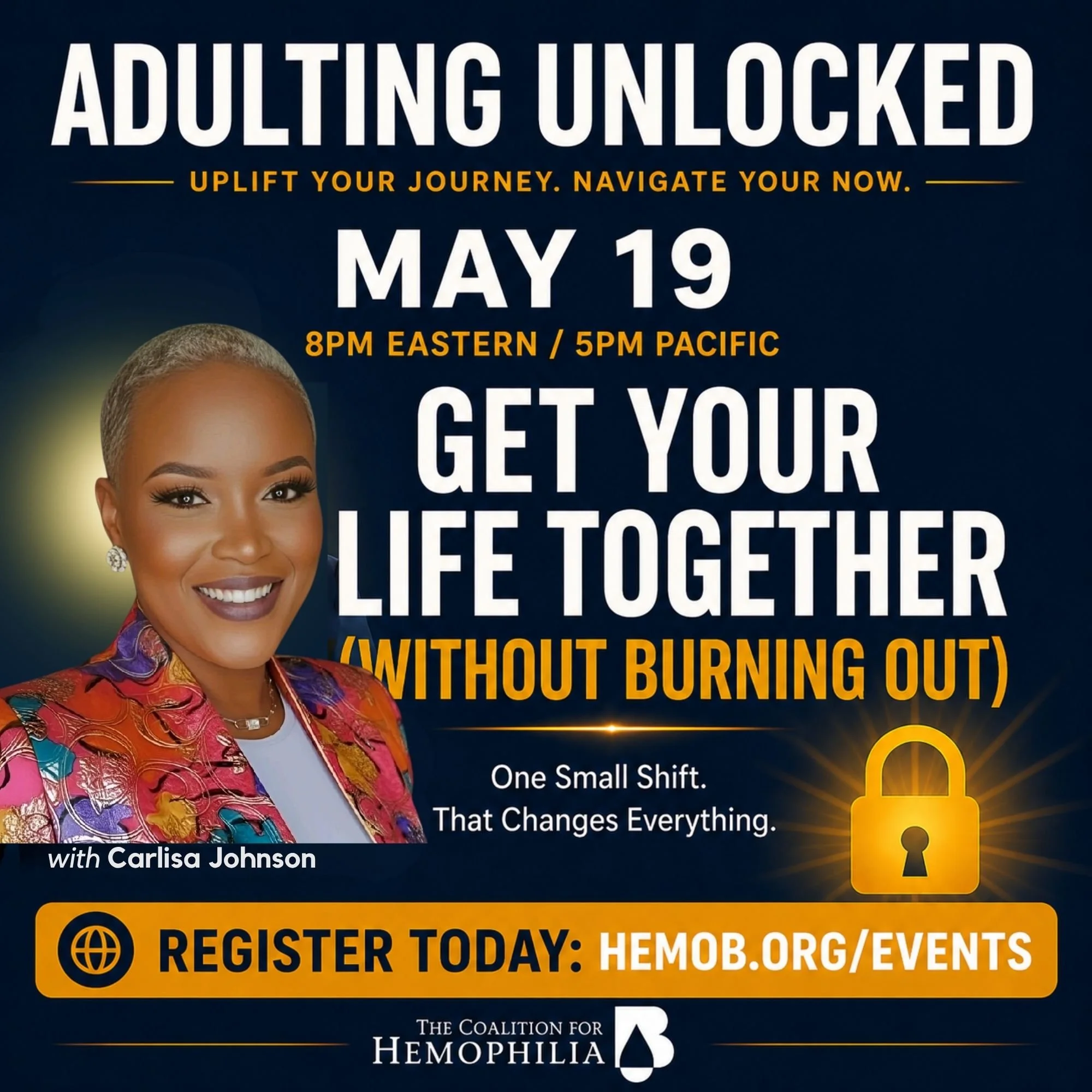
Adulting Unlocked:
Get Your Life Together (Without Burning Out)
One Small Shift That Changes Everything
You don’t need to fix everything—just one thing this week.
WHAT YOU’LL WALK AWAY WITH
A simple method you can actually use:
Spot it → Pick it → Do one thing
You’ll leave with:
One area of your life to focus on
One small, realistic action you can take this week
A way to reset when everything feels like too much
A clearer picture of your “168-hour week”—including where your time is leaking and how to get some of it back
A new way to think about busyness—and how to replace “noise” with space that actually helps
WHAT WE’LL COVER (REAL LIFE, NOT THEORY)
Why everything feels like too much (and it’s not just you)
Work never really ends
Your phone never shuts off
Rest doesn’t even feel real anymore
You’re not failing—you’re overloaded.
We’ll also challenge a cultural habit that keeps people stuck:
we’re trained to answer “How are you?” with “Busy.”
In this session, we’ll explore what happens when we stop using busyness as a default—and start building space on purpose.
The 168-Hour Reality Check (Where does your time go?)
We’ll quickly break down a typical week:
Sleep (about 8 hours/night)
Work (about 8 hours/day)
Meals (about 3–4 hours/day)
Commute + errands (varies)
Then we’ll ask: what’s happening with the “leftover” hours?
This is where most burnout lives—time wasters, doom scrolling, constant interruptions, and decision fatigue.
We’ll identify the biggest leaks and how to reclaim time in a way that supports your energy and priorities.
The 5 Areas That Affect Everything
Pick the ONE that’s out of sync this week:
People • Work • Meaning • Money • Health
When one is off, everything feels off.
Real Scenarios You’re Actually Living
People
You said yes to plans… now you’re exhausted but feel guilty canceling
→ Learn simple boundary scripts that don’t feel awkward
Work
You get messages at night and your brain won’t shut off
→ Set boundaries without risking your career
Money + Health
You’re stressed → you don’t sleep → you spend → you feel worse
→ Learn how to break the cycle with one small habit
The Shift Most People Are Missing: Stillness
It’s in the quiet that things start to make sense.
When you give yourself even a few minutes of space:
Your thoughts catch up
Your emotions regulate
Your nervous system slows down
And your creativity finally has room to show up
Stillness isn’t wasting time—it’s where alignment begins.
But There’s Another Piece We Forget… Play
Somewhere along the way, we stopped doing things just because they feel good.
We traded play for pressure.
But play isn’t childish—it’s essential.
When you allow yourself to play:
You release stress
You stop overthinking
You reconnect with yourself
And things begin to happen naturally
Ideas flow. Energy returns. You feel lighter.
Stillness helps you hear yourself. Play helps you find yourself.
The “Learn Every Day” Upgrade (without adding pressure)
We’ll introduce a simple way to build growth into your week—without turning it into homework:
one small thing learned per day (a skill, a reflection, a habit insight).
Because momentum isn’t built by doing everything—it’s built by getting 1% better consistently.
60-Second Reset (you can do anywhere)
When everything spikes:
unclench • reset • breathe out longer
A quick way to calm your system in real time.
THE TAKEAWAY
You’ll leave with:
One area to focus on
One action to take this week
A plan that actually feels doable
A clearer view of your 168-hour week and how to reduce time-wasters
A simple way to add space + play back into your life—without guilt
HOW WE CLOSE
You’ll text yourself:
“This week I’m going to ______.”
And your “one small shift” will include:
5–10 minutes of quiet (no phone, no distractions)
10–20 minutes of play (music, movement, creating, laughing)
Not perfect. Not forced. Just… real.
Because getting your life together isn’t about doing more—
it’s about creating space for what actually matters.
You’re not behind—you’re recalibrating.
Carlisa Johnson, MPH, is a Public Health Strategist, Health Communications Specialist, and Founder of K.A.M.U. Collective: Know the Art of Making You™. With over a decade of experience supporting national public health initiatives—including work with the Centers for Disease Control and Prevention (CDC) through contracting organizations such as Westat—Carlisa has led strategic communications, stakeholder engagement, and program development efforts focused on improving health outcomes and advancing equity. Her expertise spans crisis communication, behavioral health messaging, and workforce engagement, where she translates complex health information into clear, actionable, and human-centered solutions.
Training Experience Carlisa is a dynamic trainer and facilitator who delivers engaging presentations at the intersection of health, confidence, identity, and workplace well-being. She is the creator of The Art of Making You Method™, a transformative program designed to support individuals navigating major life transitions, including health and lifestyle changes. She has developed and delivered trainings such as The Calm Workforce™, a science-based session focused on managing stress and navigating change in uncertain environments, which she has presented in professional development settings including Course Con (Course Connect). Additionally, during her tenure with Westat, Carlisa facilitated workplace-focused sessions on stress reduction and emotional well-being, equipping professionals with practical tools to improve resilience and performance. Her training style blends public health expertise, behavioral insight, and real-life storytelling to create impactful and relatable learning experiences.
Education & Credentials Carlisa holds a Master of Public Health (MPH) and a Bachelor of Science in Health Education. She is a Certified Professional Makeup Artist and a Lean Six Sigma White Belt (LSSWB). Her multidisciplinary background uniquely integrates public health, behavioral science, and personal development, positioning her to deliver innovative training experiences that support both individual growth and organizational well-being.